Creating a seamless communications hub for 50,000 ANZ employees

Design Lead
Led research, design and usability testing end-to-end. Built a system map, identified content governance and search as core problems, and collaborated with a content designer on a domain model to inform the final design.
Overview
ANZ’s intranet is used by 50,000 employees globally. It has grown organically over years, and by the time we got to it, content was hard to find and the governing pages required constant manual effort to keep things in order.
My focus was on the research and information architecture, understanding the problem well enough to design something that wouldn’t just work now but would hold up over time.
The problem
Staff were struggling to find what they needed. The underlying issue was the structure: the intranet was organised around how ANZ’s teams thought about their content, not around how employees searched for it. Different domains used it in completely different ways and the governance model couldn’t flex to accommodate that.
Design approach
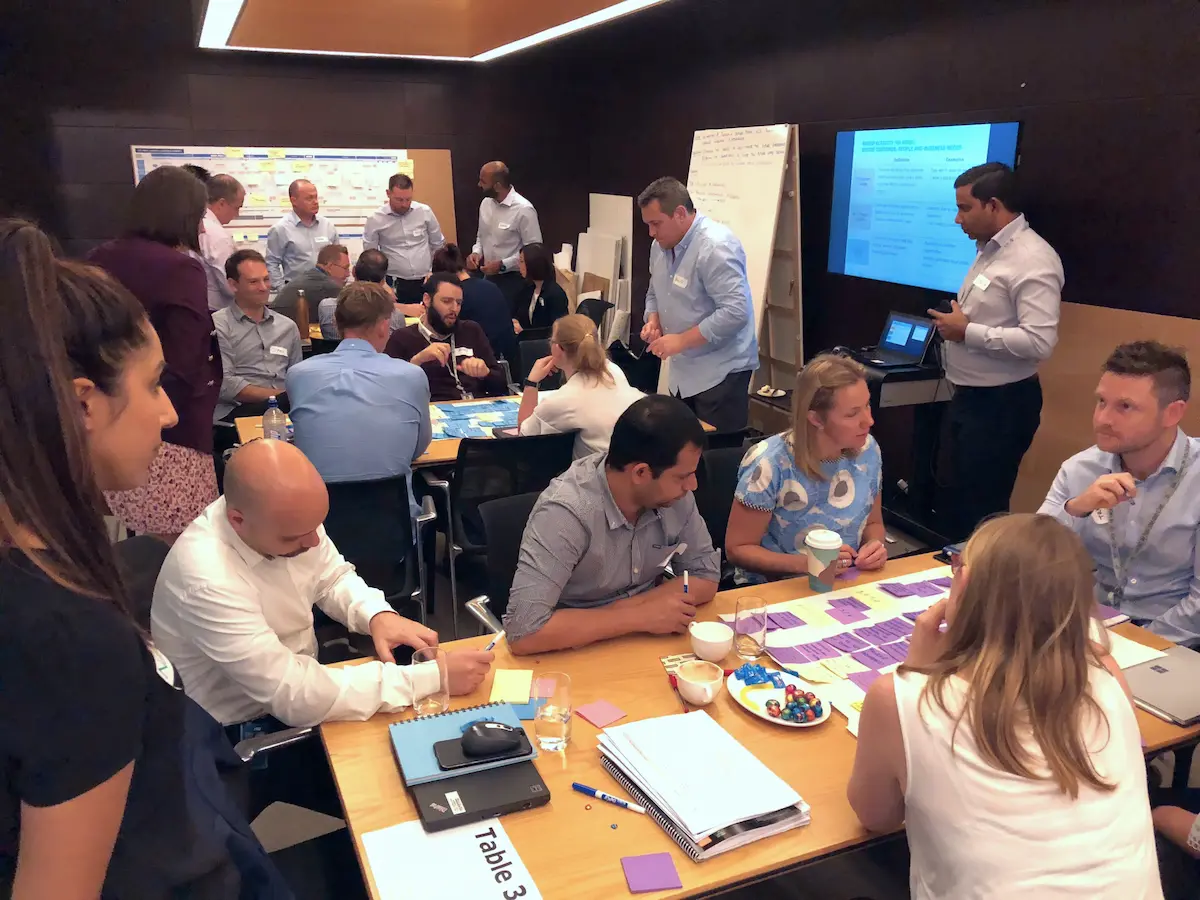
I led interviews with employees across global locations as well as workshops that brought in a range of ANZ staff to understand how they actually used the intranet day to day.
From that research, we produced two things that shaped the architecture:
- A domain model — mapping the key concepts, objects, and relationships across the intranet, which gave us a logical structure to connect content rather than just categorise it
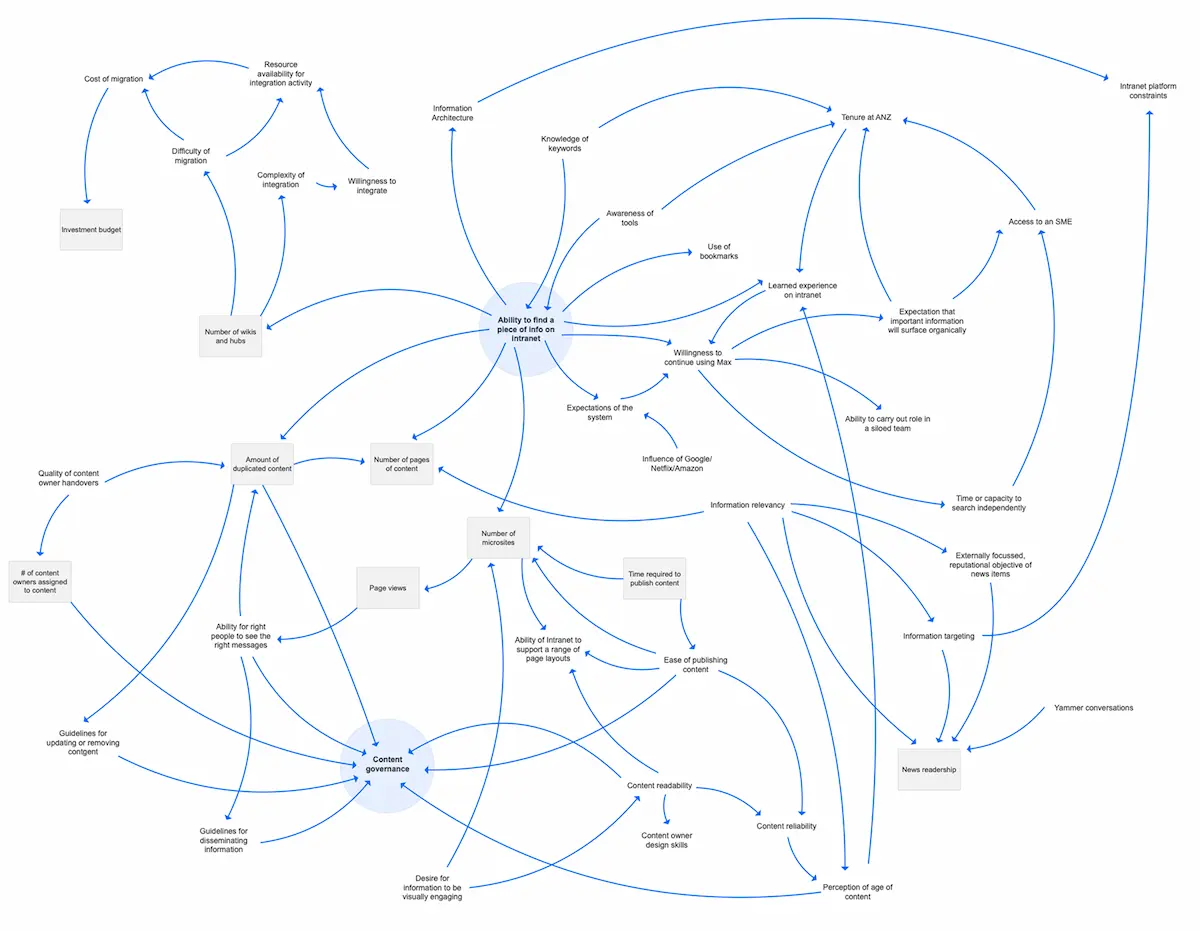
- A system map — showing where the main pinch points were, which pointed us clearly toward search and tagging as the right lever to pull
The core design decision was to stop relying on rigid content governance and instead make the system work through connecting tagged, themed and linked content that could be found through search rather than navigation. At ANZ’s scale, anything requiring careful manual organisation across hundreds of content owners was going to degrade and we designed around that reality.

Outcomes
- Better content discoverability for employees — less time hunting, more time finding
- A reduced governance burden — the system didn’t require constant curation to stay useful
- An architecture built to last, not just to work at launch